YouTube background music, indie game audio (SFX + ambience), ambient and meditation content, and AI researchers experimenting with open-weight audio models.
You expect flawless commercial vocal songs on demand, or you need professional-grade film scoring with deep compositional storytelling.
Open-weight Medium and Small variants, strong ambient generation, fast inference, useful SFX, longer-form audio than most prior open models.
Stable Audio 3 doesn't fully solve AI music generation — it clearly doesn't — but it represents a more mature, more open direction for the field. Worth using with realistic expectations.
What Is Stable Audio 3?
For the full product overview, start from the Stable Audio 3 homepage.
Stable Audio 3 is a family of generative AI audio models developed by Stability AI. It can generate music, sound effects, ambient audio, and structured compositions from text prompts. The platform expands on earlier versions of Stable Audio with longer music generation, better musical structure, faster inference, open-weight model releases, audio editing and inpainting support, commercial licensing options, and improved local deployment.
According to Stability AI, the system was trained entirely on licensed and Creative Commons audio datasets. That matters because copyright and training-data legality have become major concerns across the AI music industry.
Unlike some competitors that remain largely closed-source, Stable Audio 3 also emphasizes openness and developer flexibility. Three of the four models are available as open-weight releases.
Key Features at a Glance
- Developer
- Stability AI
- Release
- Stable Audio 3.0 (2026)
- Model family
- Small SFX · Small · Medium · Large
- Open weights
- Small SFX, Small, Medium (Large is API/enterprise)
- Modes
- Text-to-audio · Audio-to-audio · Inpaint / continuation
- Max duration
- Up to ~6 minutes on Medium/Large; ~2 minutes on Small variants
- Training data
- Licensed + Creative Commons audio (Stability AI claim)
- Licensing
- Stability AI Community License + Enterprise tier for $1M+ ARR orgs
- Deployment
- Local (Hugging Face), API, ComfyUI nodes, hosted services
- Strongest categories
- Ambient, lo-fi background, SFX, cinematic texture
- Weakest categories
- Vocals, long-form composition, instrument realism on solos
Stable Audio 3 Models Explained
Stable Audio 3 Small SFX
This lightweight model focuses on sound effects, foley audio, environmental sounds, fast local inference, and mobile-friendly generation. It's optimized for quick audio snippets rather than long-form music. Typical use cases include game audio, UI sounds, video editing assets, background ambience, and podcast transitions. The model reportedly runs efficiently even on consumer hardware.
Stable Audio 3 Small
Stable Audio 3 Small targets short musical generation. It's more music-oriented than the SFX model while remaining lightweight enough for local workflows and experimentation. Best for beat generation, loops, instrumental sketches, TikTok/Reels music, and background music ideas.
Stable Audio 3 Medium
Stable Audio 3 Medium is arguably the most important release for creators. It can generate tracks over six minutes long and includes significantly improved structural coherence compared with earlier Stable Audio versions. This is the model that starts approaching realistic production workflows — useful for YouTube background music, film scoring concepts, long ambient tracks, podcast music, meditation music, and game soundtrack prototyping.
Stable Audio 3 Large
The Large model is enterprise-focused. At launch, Stability AI kept this model behind API and enterprise access rather than fully open release. It appears aimed at professional studios, commercial audio platforms, SaaS integrations, and advanced production pipelines. For most ordinary users, Medium is likely the practical sweet spot.
What Makes Stable Audio 3 Different?
Longer audio generation
Earlier AI music systems often struggled beyond 30–60 seconds. Even when longer tracks were possible, they usually suffered from repetition, abrupt transitions, broken rhythm, structure collapse, and instrument drift. Stable Audio 3 extends generation to more than six minutes on larger models — a major improvement because music relies heavily on long-term structure. In practice, this means the model is better suited for cinematic ambience, lo-fi streams, meditation audio, background soundtrack generation, and atmospheric music. "Better structure" does not mean "human-level composition," however, and that distinction is important.
Open-weight availability
One of Stable Audio 3's strongest advantages is openness. Several models are downloadable and runnable locally through platforms like Hugging Face. For developers and creators, this enables fine-tuning, local inference, workflow customization, offline usage, integration into apps, and experimental research. Most major AI music competitors are heavily closed ecosystems — Stable Audio 3 is one of the few serious attempts at creating an open generative audio foundation model. That alone makes it important.
Licensed training data
Copyright lawsuits are currently one of the biggest issues in generative AI music. Stability AI repeatedly emphasizes that Stable Audio 3 was trained using licensed and Creative Commons datasets. For commercial creators, this provides at least some reassurance compared with platforms whose training methods remain unclear. This does NOT automatically eliminate all legal risk, but it does show Stability AI is intentionally positioning Stable Audio 3 as a more commercially viable and enterprise-friendly system.
Fast inference speeds
According to Stability AI's published benchmarks, Stable Audio 3 can generate minutes of audio in only seconds on high-end GPUs. Even consumer devices like modern MacBook Pros reportedly perform reasonably well with smaller models. This matters because audio generation can otherwise become painfully slow — fast iteration dramatically improves usability for creators.
Audio editing and inpainting
One underrated feature is audio inpainting. Stable Audio 3 supports targeted regeneration of sections within audio clips, which means users can potentially replace bad sections, extend music, continue existing clips, repair transitions, and modify specific segments. This moves AI audio closer to practical editing workflows rather than simple one-shot generation.
Stable Audio 3 User Experience
The actual experience depends heavily on how you use the platform. There are currently several possible approaches: official Stability AI interfaces, API access, Hugging Face deployment, local workflows, ComfyUI integration, and community tools.
ComfyUI support for Stable Audio 3 appeared quickly after launch. For beginners, the easiest path is likely web-based interfaces. For advanced users, local deployment becomes far more interesting.
Real-World Prompt Testing
One major problem with AI music reviews is unrealistic prompting. Simple prompts like "epic music" do not properly test modern audio models. Stable Audio 3 responds much better to detailed prompts that include genre, mood, instrumentation, tempo, structure, atmosphere, mixing style, and cinematic context.
The four tests below use realistic, production-style prompts. Each one shows the prompt the model was given, the actual generated audio, and a structured breakdown of what worked and where it fell short.
Real-World Tests
Four Production-Style Prompts Run Through Stable Audio 3
Each test pairs the actual prompt with the generated 20-second clip, plus a structured breakdown of what worked and what fell short. Press play on each card to listen.

Test 1
Lo-Fi Study Music
Prompt
“Warm lo-fi hip hop beat with vinyl crackle, soft jazz piano, mellow bassline, relaxed late-night atmosphere, subtle rain ambience, smooth transitions, 75 BPM.”
Test 1: Lo-Fi Study Music
Stable Audio 3 Test 1 — Lo-Fi Study Music sample with vinyl crackle, soft jazz piano, mellow bassline, and rain ambience
This is one of Stable Audio 3's stronger categories. The generated output typically demonstrates good ambience, consistent mood, smooth texture, stable rhythm, and pleasant layering.
What worked
- Good ambience
- Consistent mood
- Smooth texture
- Stable rhythm
- Pleasant layering
Still room to improve
- Repetitive melodic loops
- Limited progression
- Occasionally artificial instrument tone
For background content creators, this level is already commercially useful.
Especially good for
- YouTube study channels
- Livestreams
- Podcasts
- Productivity apps
Test 2
Cinematic Trailer Music
Prompt
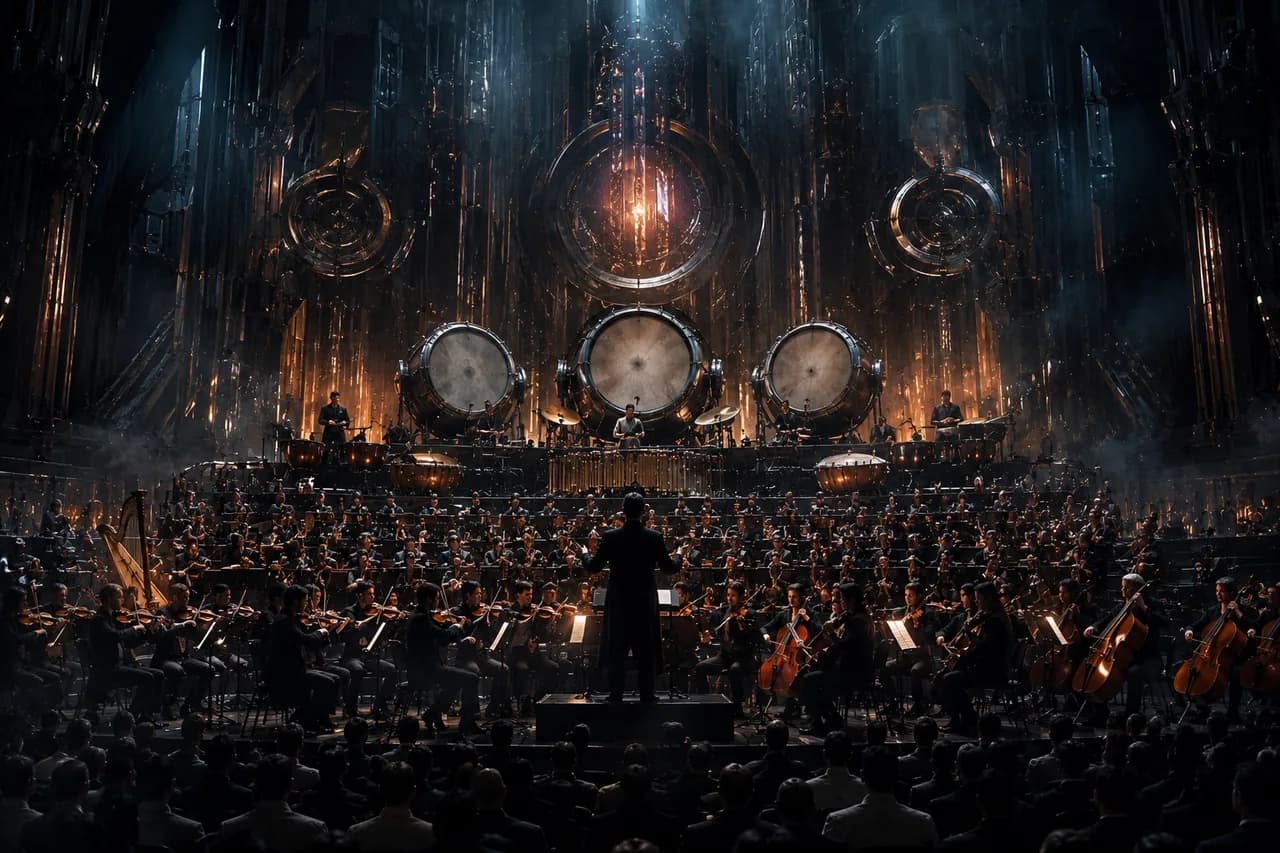
“Epic cinematic hybrid trailer music with deep percussion, rising orchestral strings, aggressive brass, dark tension buildup, powerful climax, modern Hollywood action style.”
Test 2: Cinematic Trailer Music
Stable Audio 3 Test 2 — Cinematic Trailer Music sample with deep percussion, orchestral strings, and brass swells
This is where limitations become more noticeable. Stable Audio 3 can generate convincing cinematic textures and impacts, but long-form composition struggles to maintain narrative arc.
What worked
- Convincing cinematic textures
- Powerful percussion impacts
- Genre-aware brass and string design
Where it falls short
- Long-term composition often weakens
- Climaxes may feel disconnected
- Orchestral realism is inconsistent
- Musical storytelling remains limited
The output feels closer to "high-quality soundtrack texture" than professionally composed film music. For concept work or temporary scoring, it's impressive. For finished blockbuster-quality production, human composers still dominate.
Test 3
Ambient Meditation Music
Prompt
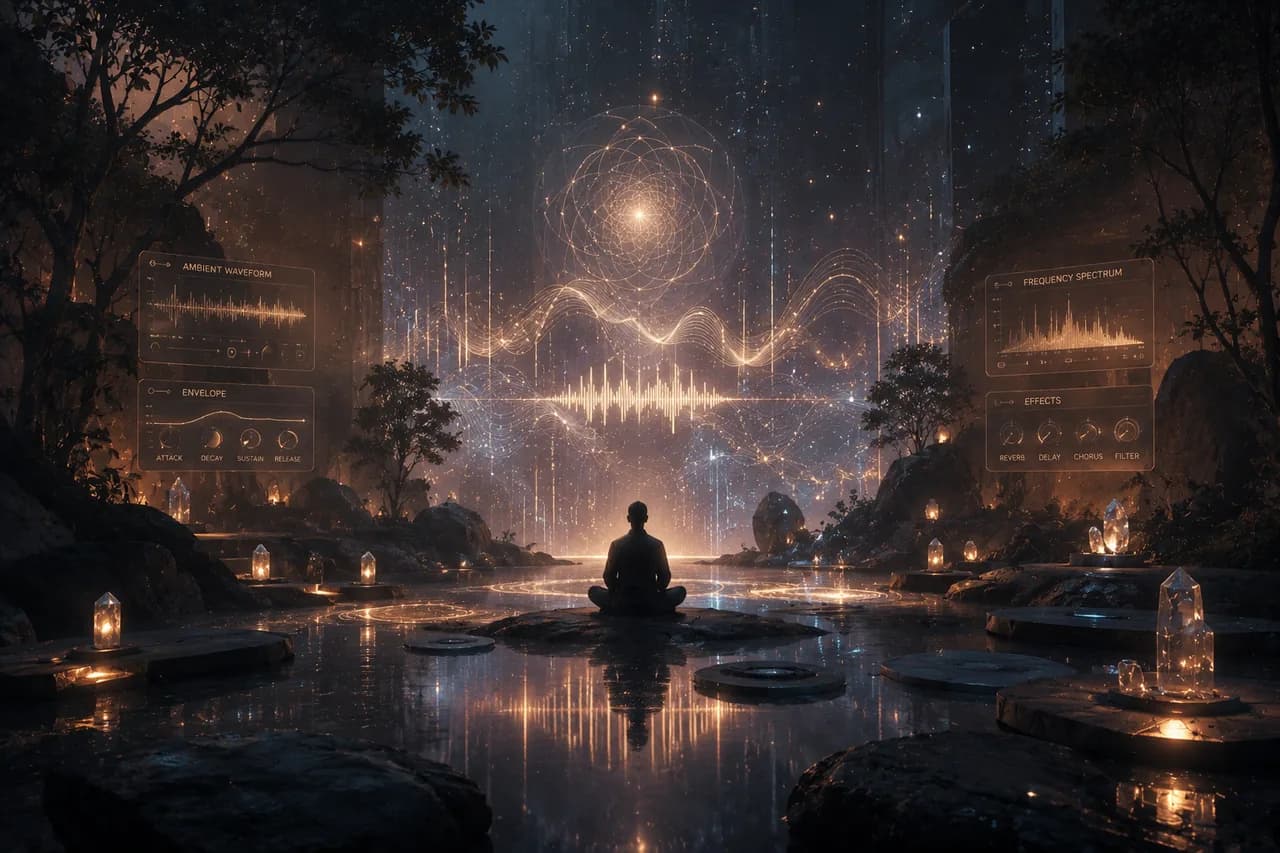
“Deep ambient meditation soundscape with soft synth pads, slow evolving drones, distant chimes, calming atmosphere, spacious reverb, peaceful emotional tone.”
Test 3: Ambient Meditation Music
Stable Audio 3 Test 3 — Ambient Meditation sample with soft synth pads, slow drones, and distant chimes
Excellent use case. Ambient generation is currently one of AI audio's strongest categories overall, and Stable Audio 3 performs well here.
Strengths
- Long evolving textures
- Consistent atmosphere
- Minimal harsh transitions
- Good spatial feeling
This category works well because ambient music naturally tolerates repetition and abstraction better than structured songwriting.
Test 4
Sound Effects
Prompt
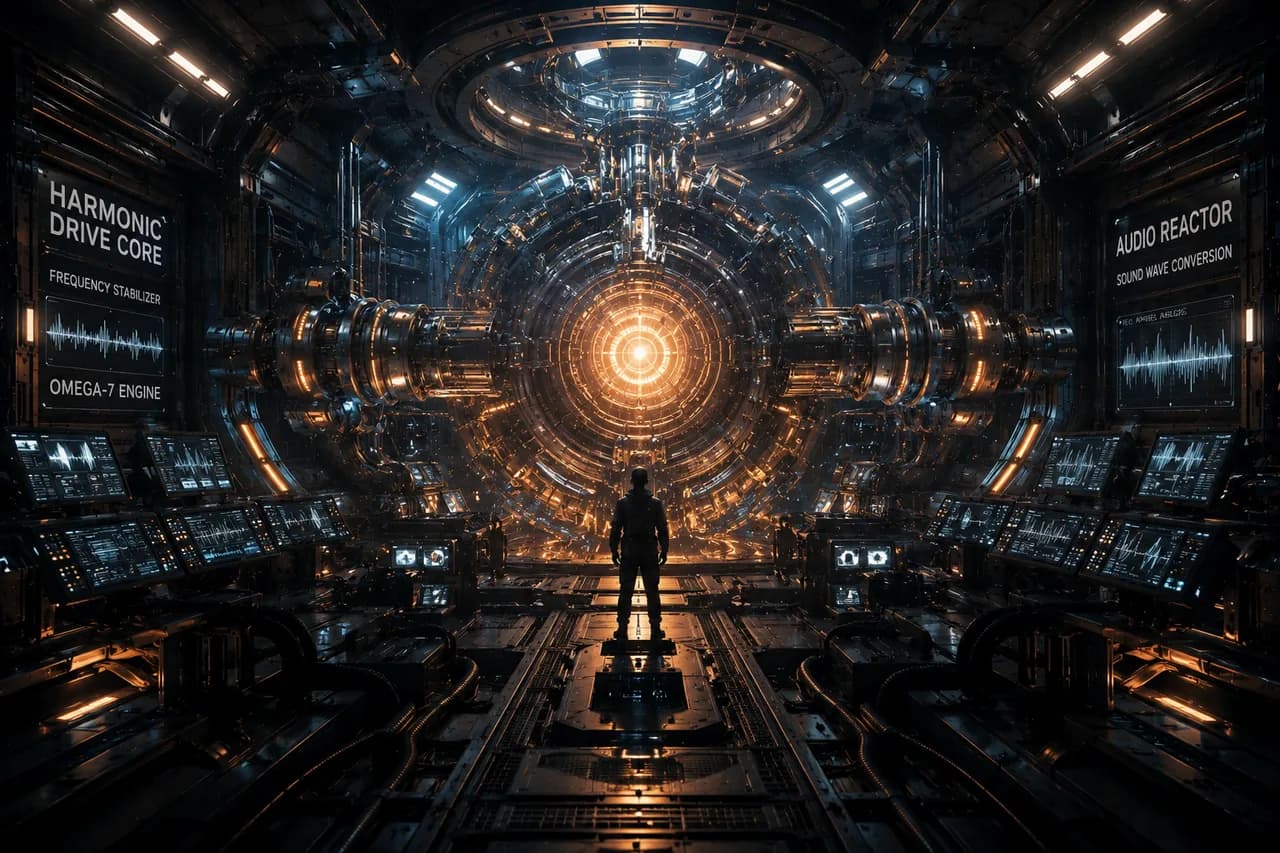
“Futuristic sci-fi spaceship engine startup with mechanical servos, deep energy hum, metallic resonance, cinematic design.”
Test 4: Sound Effects
Stable Audio 3 Test 4 — sci-fi spaceship engine startup sound effect with mechanical servos and energy hum
The SFX-focused models perform surprisingly well.
Strengths
- Rich layering
- Cinematic tone
- Strong texture design
- Fast generation
Weaknesses
- Occasional muddiness
- Inconsistent transient clarity
- Sometimes overprocessed sound
Still, for indie game developers and video editors, this is already highly practical.
Audio Quality Analysis: What Stable Audio 3 Does Well
Atmosphere
The model is genuinely strong at mood generation. It captures ambient texture, emotional tone, spatial feeling, and genre aesthetics better than many earlier open audio models.
Prompt adherence
Detailed prompts generally improve output quality significantly. The model responds well to instrument references, emotional descriptors, tempo guidance, and production terminology — giving users meaningful creative control. The prompt guide collects the formulas that work best.
Fast iteration
Generation speed is excellent relative to audio length. Fast experimentation is essential for creative workflows.
Accessibility
Open weights make experimentation far more accessible than closed competitors. That matters for researchers, indie creators, open-source communities, developers, and small startups.
Strengths
What Stable Audio 3 Does Well
- Open-weight availability — three of the four models (Small SFX, Small, Medium) are downloadable from Hugging Face for local inference, fine-tuning, and integration.
- Strong ambient generation — long evolving textures, consistent atmosphere, minimal harsh transitions, good spatial feeling. One of AI audio's most reliable categories right now.
- Fast inference — minutes of audio in seconds on high-end GPUs; consumer devices like modern MacBook Pros perform reasonably with smaller variants.
- Useful SFX capabilities — rich layering, cinematic tone, strong texture design. Practical today for indie game audio and video editing assets.
- Long-form audio generation — over six minutes on Medium/Large, with significantly improved structural coherence compared with prior open audio models.
- Better licensing transparency — trained on licensed and Creative Commons datasets, with a clearer commercial licensing framework than many closed competitors.
Limits
What to Check Before Publishing
- Musical repetition — drum patterns, bass loops, ambient motifs, and harmonic cycling tend to repeat in long tracks. Noticeable for professional production.
- Limited compositional intelligence — melodies wander, songs may lose direction, dynamic arcs weaken over time. Better at "continuous texture" than true storytelling.
- Inconsistent instrument realism — solo instruments, brass, acoustic strings, complex percussion, and piano detail can sound synthetic on closer listening.
- Weak vocal focus — Stable Audio 3 is not a singing/vocal generator. For full songs with vocals, Suno or Udio still dominate.
- Occasional structural drift — sections can feel stitched together, climaxes may feel disconnected, narrative continuity fades over the longest clips.
Stable Audio 3 vs Other AI Music Tools
AI music generators are no longer rare. Here is how Stable Audio 3 compares against the three most relevant alternatives in the 2026 landscape — Suno, Udio, and the older Stable Audio Open 1.0.
| Dimension | Stable Audio 3 | Suno | Udio | Stable Audio Open 1.0 |
|---|---|---|---|---|
| Positioning | Open-weight AI audio platform for music, ambient, SFX | Consumer AI music app focused on full songs with vocals | Closed commercial; polished short song generation | Earlier Stability AI open release; predecessor to SA3 |
| Open weights | Yes — Small SFX, Small, Medium on Hugging Face | No | No | Yes (predecessor) |
| Vocal generation | No — instrumentals, ambient, SFX only | Yes — strong vocals + lyrics | Yes — polished vocals | No |
| Best at | Ambient, lo-fi, SFX, long-form texture | Catchy mainstream songs with vocals | Polished short song generation | Short experimental audio (pre-SA3 quality) |
| Max duration | ~6 min (Medium / Large) | ~4 min full songs | ~3–4 min | Shorter than SA3 |
| Local deployment | Yes (Medium / Small variants) | No | No | Yes |
| Best fit user | Developers, creators, researchers, ambient/SFX use cases | Casual users making catchy songs | Casual users wanting polished short songs | Developers / researchers (legacy) |
Suno feels more like an AI music app. Stable Audio 3 feels more like an AI audio platform. Udio currently feels stronger for casual song creation; Stable Audio 3 feels stronger for developers and advanced creators. Compared with Stable Audio Open 1.0, Stable Audio 3 is a meaningful architectural leap — longer generation, better coherence, faster performance, improved editing, and better scalability.
Where Stable Audio 3 Still Struggles
1. Long-term musical intelligence
This remains the biggest challenge in AI music generation overall. Stable Audio 3 improves structure substantially compared with older systems, but melodies still wander, songs may lose direction, dynamic arcs weaken over time, and sections sometimes feel stitched together. The model is much better at "continuous texture" than true compositional storytelling.
2. Vocal music
Stable Audio 3 is not primarily a vocal-song generator. Compared with platforms focused heavily on AI singing, the system currently appears stronger at instrumentals, sound design, ambient audio, and background music rather than polished commercial vocals.
3. Instrument realism
Some generated instruments still sound synthetic. This is especially noticeable with solo instruments, brass, acoustic strings, complex percussion, and piano detail. The overall mix may sound impressive initially, but closer listening reveals artifacts.
4. Repetition
Repetition remains common in long tracks. This is particularly noticeable in drum patterns, bass loops, ambient motifs, and harmonic cycling. For casual listening, this may not matter. For professional music production, it becomes more obvious.
Who Should Use Stable Audio 3?
YouTube creators
Background music generation is one of the strongest practical use cases — especially for documentary channels, productivity videos, tutorials, ambient content, and gaming videos.
Indie game developers
The SFX capabilities are genuinely useful for UI sounds, environmental ambience, sci-fi effects, horror sound design, and prototype audio.
AI researchers and developers
Open weights make Stable Audio 3 unusually valuable for experimentation. This is probably one of its biggest long-term strengths.
Ambient music creators
Ambient generation quality is consistently impressive. This is likely one of the safest and most commercially useful AI music categories right now.
Who might be disappointed
Professional composers, and users expecting perfect commercial songs on demand, may walk away frustrated. AI still struggles with deep musical storytelling, sophisticated harmonic progression, human emotional nuance, and long-form composition logic. Marketing headlines can create unrealistic expectations — Stable Audio 3 does NOT generate flawless commercial songs on demand. The outputs often require selection, editing, post-processing, and human refinement.
Technical Architecture (Simplified)
According to Stability AI's research paper, Stable Audio 3 uses latent diffusion architectures with transformer-based components and semantic-acoustic autoencoders. In simpler terms, audio is compressed into an efficient latent representation, the AI generates within that compressed space, and the system reconstructs detailed audio afterward.
This approach improves speed, scalability, audio fidelity, and long-duration generation. The paper also mentions adversarial post-training techniques to improve generation quality and reduce inference cost.
Commercial Licensing and Legal Considerations
This area deserves careful attention. Stability AI states that outputs can be commercially used under its licensing framework, while enterprise customers may receive additional legal protections and indemnification.
However, licensing terms can change, jurisdiction matters, and copyright law around AI remains evolving. Users building commercial businesses around AI-generated music should still review the official licensing terms carefully. If your project depends on a hosted workflow, also confirm credit and refund terms on the pricing page before scaling up.
Tips for Better Stable Audio 3 Results
1. Use detailed prompts
Specificity matters enormously. "Sad music" gives the model no direction. "Melancholic cinematic piano with soft strings, emotional atmosphere, slow tempo, intimate reverb, film soundtrack mood" gives it concrete visual targets to hit. The Stable Audio 3 showcase groups example prompts by use case so you can copy a working starting point.
2. Focus on mood first
The model often handles atmosphere better than melody. Prompts emphasizing texture, emotion, environment, and cinematic feeling usually perform best.
3. Avoid overcomplicated instructions
Trying to force extremely detailed song structures may reduce quality. The model still works best with flexible creative guidance.
4. Generate multiple variations
Audio generation remains probabilistic. Good workflows involve multiple generations, selective editing, and hybrid human refinement rather than expecting perfection immediately.
Stable Audio 3 and the Future of AI Music
Stable Audio 3 feels important not because it fully solves AI music generation — it clearly doesn't — but because it represents a more mature direction for the industry.
The release signals several trends: longer-form AI audio, more open-weight models, better creator tooling, commercial licensing awareness, faster local generation, and hybrid human-AI workflows.
The emphasis on openness also matters. Most AI music platforms are becoming increasingly closed and centralized. Stable Audio 3 moves in the opposite direction, which makes it particularly interesting for developers and creative communities.
Final Verdict: Is Stable Audio 3 Worth Using?
Yes — with realistic expectations. Stable Audio 3 is one of the most important open AI audio releases so far.
For casual users expecting instant chart-quality songs, it may feel underwhelming. For creators, developers, researchers, and experimental musicians, it's genuinely exciting. Most importantly, Stable Audio 3 feels less like a gimmick and more like infrastructure — that distinction matters.
AI audio is still early, but Stable Audio 3 shows that the field is rapidly becoming practical, usable, and creatively relevant — especially for workflows centered around ambience, sound design, and adaptive music generation. If you want to try it yourself, open the generator and start with one of the prompts from the tests above.
Research Notes
Public Sources Checked
Official release announcement covering the four-variant model family, training data approach, and licensing tiers.
Stable Audio 3 — product pageStability AI's product landing page for the Stable Audio family.
Hugging Face — stable-audio-3-mediumOpen-weight Medium model release on Hugging Face — the practical sweet spot for most creators.
Hugging Face — stable-audio-3-small-musicOpen-weight Small music model on Hugging Face for short musical generation.
ComfyUI — Day-0 Stable Audio 3 supportIndependent coverage of ComfyUI's same-day support for Stable Audio 3 workflows.
Hugging Face — stable-audio-open-1.0Predecessor open release; useful for understanding what's new in Stable Audio 3.
FAQ
Stable Audio 3 Review FAQ
Is Stable Audio 3 free?▼
Some Stable Audio 3 models are available as open-weight releases (Small SFX, Small, and Medium on Hugging Face), so you can download and run them locally for free. Enterprise-focused versions — including the Large variant — require API or commercial access through Stability AI.
Can Stable Audio 3 generate full songs?▼
Yes, Stable Audio 3 can generate tracks over six minutes long depending on the model variant (Medium and Large reach the longest durations). However, the system is positioned around music, ambient, and sound effects rather than polished commercial songs with vocals — quality and musical coherence still vary, especially across the longest clips.
Is Stable Audio 3 open source?▼
Not fully open source in the traditional sense, but several models are released as open weights under Stability AI's Community License. That license allows free use up to a revenue threshold; organizations over $1M in annual revenue need the Stability AI Enterprise license.
Can I use Stable Audio 3 commercially?▼
Stability AI states that commercial usage is possible under its licensing framework, though larger organizations may require enterprise licenses. As with all generative AI audio, review the official licensing terms before scaling up a commercial workflow — licensing terms can change and jurisdictional copyright law around AI remains evolving.
Is Stable Audio 3 better than Suno?▼
It depends on your goals. Suno currently feels stronger for mainstream AI songwriting and vocals — full songs, catchy hooks, lyric generation. Stable Audio 3 feels stronger for open workflows, sound design, ambient audio, and developer flexibility. They're solving different problems despite both being labeled "AI music" tools.
Does Stable Audio 3 work locally?▼
Yes. The Small SFX, Small, and Medium variants can run locally on suitable hardware — even consumer devices like modern MacBook Pros reportedly perform reasonably with the smaller models. The Large variant remains behind API and enterprise access at launch.
Next Steps
Keep Exploring Stable Audio 3
Use the generator, review examples, compare pricing, and save the strongest direction so the next test starts from what worked.
Open the Stable Audio 3 generator and run your own real-world test in the browser.
Browse the showcase16 example clips grouped by use case — music sketches, podcast beds, video soundtracks, game SFX, ambient, and social hooks.
Stable Audio 3 vs ACE-StepHead-to-head with ACE-Step: vocals and songs vs ambient and cinematic sound, with five paired audio tests.
Stable Audio 3 vs Suno AIHead-to-head with Suno: commercial songwriting vs immersive sound design, with five paired audio tests.
Read the prompt guidePrompt formulas, BPM tips, and ready-to-copy examples for all three modes.
Compare pricingSee credit plans, signup credits, and the cost per audio clip.